
Volkswagen tightens operations, Audi balances ambition with reality, and the aftermarket finds opportunity in stability.
1) Volkswagen is no longer chasing growth — it’s protecting the foundation
Volkswagen’s latest reporting makes one thing clear: the era of unchecked volume growth is over. The brand confirmed a notable decline in fourth-quarter deliveries, driven largely by slower demand in China and North America — regions that once masked inefficiencies with sheer scale. According to Reuters’ breakdown of Volkswagen’s Q4 delivery results, global deliveries fell nearly five percent year-over-year, forcing a more sober look at costs, platforms, and long-term planning.
This isn’t panic — it’s recalibration. VW leadership has been increasingly open about focusing on fewer platforms, tighter production discipline, and profitability over headline numbers. That shift matters downstream. When OEMs stop thrashing, platforms stabilize — and stable platforms are where the aftermarket thrives.
The competitive pressure is especially intense in China, where Volkswagen slipped to third place behind fast-moving domestic manufacturers. As Reuters reports on VW’s position in the Chinese market, local brands are winning on speed, pricing, and software integration — areas legacy OEMs are still adapting to.
2) Audi’s delivery dip hides a more interesting EV story
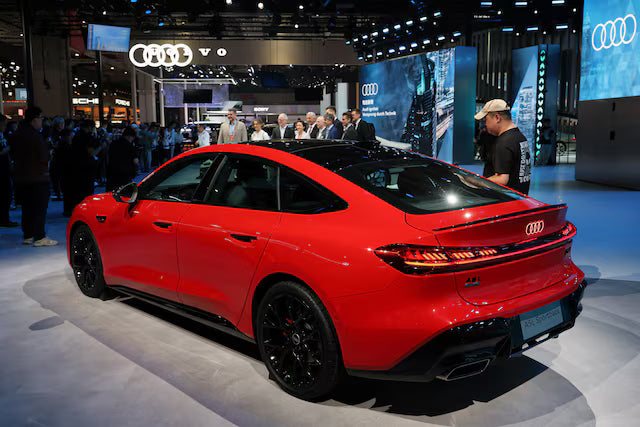
Audi’s 2025 delivery numbers followed a similar pattern: overall volume slipped, but electrification accelerated. Global deliveries declined just under three percent, while fully electric vehicle deliveries jumped more than 35 percent — a meaningful divergence. The data comes from Reuters’ coverage of Audi’s annual delivery report.
This split reality is important. Audi isn’t losing relevance — it’s transitioning unevenly. ICE and hybrid demand remains sensitive to tariffs and macro pressure, while EV interest continues to climb as product offerings mature. That creates a longer tail for existing platforms and a growing base of owners looking to improve the dynamics of heavier, more complex vehicles.
For the aftermarket, that’s not a threat. It’s a shift in emphasis. As EV adoption grows, performance becomes less about peak numbers and more about confidence: braking feel, suspension control, and managing mass intelligently.
3) The quiet end of small gasoline cars changes the entry point
Volkswagen leadership has also made something else explicit: the company will no longer develop new small gasoline cars. Entry-level vehicles going forward will be electric — full stop. That position was outlined as VW discussed its future small-car strategy, as covered by Reuters’ reporting on VW’s decision to end development of small ICE models.
This has real implications for enthusiast culture. Historically, small, affordable cars have been the gateway into modification — light weight, simple mechanicals, huge upside. EV replacements won’t replicate that formula exactly, but they will create a new baseline where suspension tuning, wheel selection, and braking upgrades carry even more weight in shaping the driving experience.
The opportunity doesn’t disappear — it evolves.
4) Why platform stability favors the aftermarket
Across Volkswagen and Audi, the through-line is discipline. Fewer platforms. Longer production cycles. More reuse of core architectures. Those decisions are driven by cost control — but they also benefit anyone building parts designed to fit, last, and perform consistently.
When OEMs churn platforms every two years, aftermarket development becomes reactive. When platforms endure, engineering depth wins. That’s when wheel fitments get perfected, suspension tuning gets refined, and brake solutions evolve beyond “good enough.”
This is where companies grounded in fundamentals — unsprung mass reduction, chassis balance, thermal management — continue to matter, regardless of powertrain.
5) The 2026 takeaway: performance isn’t gone, it’s concentrating
Strip away the headlines and the message is clear: Volkswagen Group isn’t abandoning enthusiasts — it’s narrowing its focus. The brands that survive the next decade will be the ones that execute cleanly, not noisily.
- Lower volumes push OEMs toward fewer, better-defined platforms.
- EV growth shifts performance priorities toward feel, control, and confidence.
- Cost pressure creates OEM compromises the aftermarket can solve intelligently.
- Longer ownership cycles increase demand for meaningful upgrades.
For NEUSPEED’s world, that landscape is familiar. Performance has never been about chasing trends — it’s about refining what already works. And as Volkswagen and Audi settle into a more disciplined era, that philosophy feels more relevant than ever.