
VW is swinging the axe to survive, while Audi doubles down on tech and drivetrains. Between factory closures, new engines, and smarter lighting, the next few years are going to reshape how we modify and enjoy these cars.
1. Volkswagen Hits the Reset Button – Hard
If you’ve been feeling like Volkswagen Group has been in “permanent turbulence” mode, you’re not wrong. The latest wave of restructuring is the most brutal yet. According to a deep-dive from the Financial Times’ look at VW’s radical revamp, the company is cutting around 35,000 jobs in Germany by 2030 and ending car production at long-standing sites like Dresden and Osnabrück. Dresden will be turned into an “innovation campus,” while Osnabrück is effectively looking for a new purpose—or a buyer.
That’s not just housekeeping. It’s a full reset driven by a cocktail of problems: declining sales in core markets, fierce EV competition (including cheaper Chinese imports), and the lingering hangover of U.S. tariffs and the Dieselgate bill. The story notes that VW’s share price is down roughly 60% from its 2021 high and that even with a planned €6 billion cost improvement program, the group’s 2027 profit forecast still sits below its 2023 peak.
The big picture: Volkswagen is slimming down, simplifying, and trying to get lean enough to survive an EV world it was late to dominate. That’s painful inside Wolfsburg, but from the outside it sets up an interesting landscape for the enthusiast and aftermarket worlds.
2. What VW’s Revamp Actually Means for Platforms and Parts
When a giant like VW goes into survival mode, it doesn’t just cut people and plants; it trims complexity. Fewer factories building fewer variants on more standardised platforms is the obvious direction. That means:
- Longer-running architectures. If you’re tired of chasing a new fitment every two years, this is good news. MQB and its successors are far more likely to be stretched and reused than ripped up and replaced overnight.
- More predictable tuning targets. Stable wheelbases, brake packages, knuckle designs, hub specs, and suspension layouts mean the aftermarket can invest deeper in R&D for a smaller set of platforms—and squeeze more refinement out of each part.
- Tighter engineering expectations. VW can’t afford flops. That usually means less wild experimentation and more logical evolution of existing product lines. Enthusiasts may see fewer “weird” one-off trims, but a healthier ecosystem of core models that are easier to support long-term.
On the strategy side, VW has also shuffled its leadership deck. The Group recently appointed Ludwig Fazel as its new Head of Group Strategy, reporting directly to CEO Oliver Blume. His background in Group Components and platform business is a giant, blinking sign: future strategy will be built around rationalised, shared architectures and component sets.
For the tuning world, that’s both a constraint and an opportunity. Constraint, because tighter platforms and cost pressure mean less slack for “loose” aftermarket engineering. Opportunity, because if you build smart, platform-aware hardware (think wheels, brakes, and suspension that respect load cases and electronic aids), the potential customer base for each well-designed kit just got bigger and longer-lived.
3. Audi’s Counter-Move: Tech, not Drama
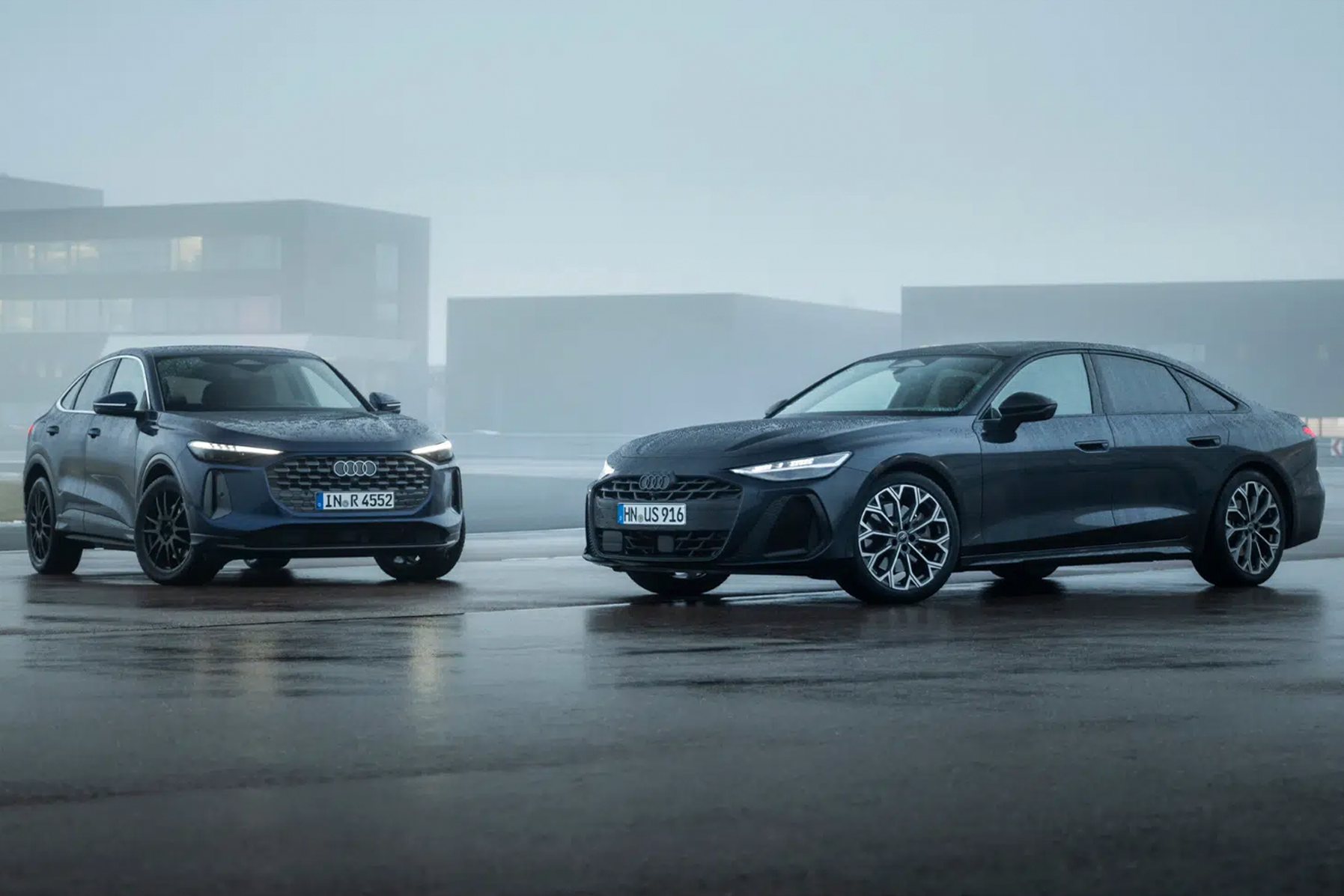
While VW wrestles with its identity crisis, Audi is working on something quieter but just as important: making its core models feel more advanced without reinventing the entire car every generation. Recent reporting highlights upcoming upgrades to the A5, A6, Q5, and Q6 lineup, including Matrix LED headlights and programmable OLED taillights for the 2026 A6 , with user-configurable light signatures and improved visibility baked in.
That might sound like fluff if you’re a “horsepower first” person, but this is the stuff that defines modern premium feel—and it has knock-on effects for the aftermarket. Lighting has officially joined wheels, brakes, and suspension as a key “signature” component. Owners are going to care what their taillight animations look like in the same way they care what their wheel spokes look like.
On the powertrain side, Audi has also introduced an all-new 3.0-liter V6 TDI engine with mild-hybrid tech and an electric compressor . The unit debuts in the A6 and Q5, delivering quicker response, better efficiency, and compatibility with HVO (hydrotreated vegetable oil) fuels. It’s very “European fleet” on paper, but the tech recipe—electric boost, mild hybrid, alternative fuels—hints at how Audi plans to keep combustion viable in markets that still demand it.
For tuners, this engine layout is both promising and challenging. You’re no longer just dealing with a turbo and a tune; you’re working around:
- An electric compressor that changes how low-RPM torque arrives
- Mild-hybrid systems that sit in the driveline and regen under decel
- Fuel systems certified for alternative fuels like HVO
That’s fertile ground if you’re willing to think beyond the classic “add boost, send it” mentality and start optimizing drivability, thermal management, and real-world efficiency alongside power.
4. Where This All Lands for Enthusiasts and the Aftermarket
Put VW’s crisis and Audi’s engineering together and you get a clear picture of the next few years:
- Fewer platforms, more depth. The big cost-cutting at VW means fewer roll-of-the-dice architectures and more evolution of the ones that work. That’s ideal for companies that obsess over one chassis and do it properly.
- More electronics, more nuance. Audi’s direction shows that “feel” is increasingly delivered through software-managed hardware: matrix lights, active suspension, hybrid powertrains. Upgrades have to respect the network and keep the ECU happy.
- Weight and heat are still the enemy. Big EVs and tech-heavy ICE cars both carry weight. Lightweight wheels, well-engineered two-piece rotors, and serious cooling solutions are more relevant than ever—arguably more important than a raw horsepower bump for most drivers.
- Alternative fuel and hybrid tuning will grow. A V6 TDI that’s HVO-compatible and boosted by an electric compressor is essentially Audi announcing, “combustion isn’t dead, it’s getting weirder.” The aftermarket that embraces that complexity wins.
For a brand like NEUSPEED, that probably means doubling down on the stuff you’re already good at—wheels, brakes, suspension, and smart powertrain solutions—but making sure every new piece is developed with platform longevity and electronics integration in mind. The days of designing in a vacuum are over; the days of designing alongside the car’s software and long-term platform roadmap are here.
5. The Takeaway: Chaos at the Top, Opportunity on the Ground
From the outside, it’s easy to look at VW’s job cuts and plant closures and see only decline. It’s easy to glance at Audi’s mild-hybrid diesels and OLED light shows and shrug. But for the people actually driving, tuning, and building parts, this is arguably the most interesting era in years.
We’re heading into a window where:
- VW must make its existing platforms work harder and live longer
- Audi is quietly sharpening its tech and drivetrains instead of chasing shock-value concepts
- The gap between “stock” and “perfectly sorted” grows wider, not smaller
That gap? That’s exactly where enthusiasts live—and where the aftermarket makes its living. If you can build parts that respect the new constraints while leaning into the fun, you’re not just surviving this transition. You’re surfing it.